


Upgrading Your Home's Entrance and Foyer
- Antonio Aversa
- Jan 2
- 8 min read

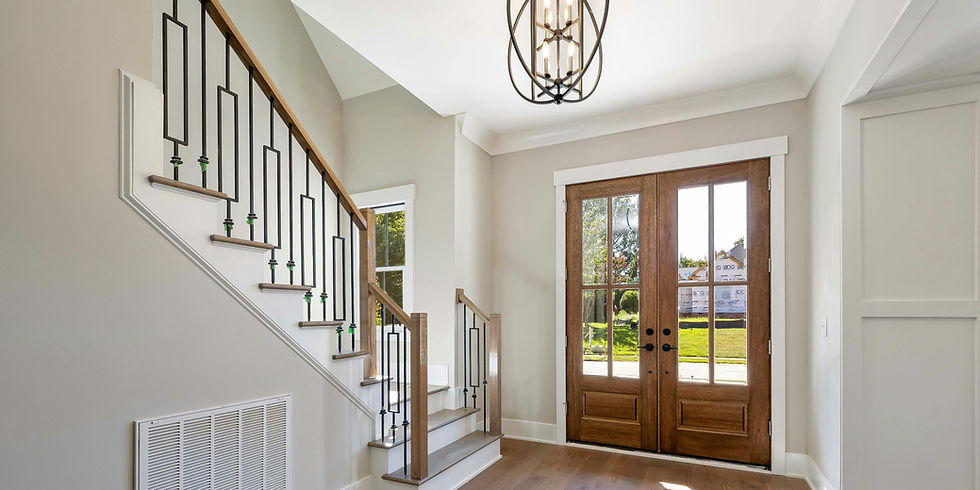
If you think about it, you walk through your front door multiple times every day, but when was the last time you really looked at your entryway? For most of us, the foyer becomes an afterthought, a place where shoes pile up, coats get tossed, and mail accumulates. But here's the thing: your entrance sets the tone for your entire home. It's the first thing guests see, the last thing you experience before heading out, and honestly, it deserves more attention than that basket of random items currently living there.
Upgrading your entryway doesn't require a massive budget or months of construction. Sometimes it's all about making smart choices with flooring, paint, adding functional storage, or improving the lighting. Let's talk about how to make your entrance actually work for you, whether you have a grand two-story foyer or a tiny entryway that opens straight into your living room.
First Impression Improvements
Your entrance is the first thing people see when they visit, and first impressions stick. Just as important, though, is how well this space functions for you every day. A good entrance looks good while helping you stay organized and making coming home feel easier.
The Front Door Itself
This might technically be not a big part of the foyer, but it's one of the most impactful updates you can make. Is it dated, damaged, or just not doing much for your curb appeal? Consider either replacing the door, or giving it a fresh coat of paint.
Don't forget the hardware. Upgrading to quality door handles, locks, and a new house number can a world of difference.
Paint and Wall Treatment
If your foyer walls are still the builder-grade beige from when the house was new, it's beyond time for a change. And this time around, you want to choose a color that feels welcoming but can handle the reality of an entryway: this is where wet umbrellas lean, where backpacks get dropped, and where walls inevitably get bumped and scuffed.
If you have kids, pets, or you're just hard on your walls, consider a more durable wall treatment for the lower half of the wall, like beadboard wainscoting or board and batten. This adds some architectural interest while protecting the walls from the inevitable dings and scratches that come with high traffic.
Trim and Molding
Upgrading your baseboards, door casings, and crown molding can elevate the most basic entrance into something that feels more custom and elevated. If your current trim is thin and minimal, going wider and more substantial makes a noticeable difference.
Painted trim in a crisp white or a contrasting color adds definition and polish. If your home has beautiful original woodwork that's been painted over, stripping and refinishing it can bring back character that's been hidden for decades.
Flooring for High-Traffic Entries
Your entrance floor takes more abuse than almost any other surface in your home (second only to your garage floor). Rain, snow, mud, salt, dirt, and constant foot traffic. Whatever you choose needs to handle all of that without looking terrible after six months.
Porcelain and Ceramic Tile: The Reliable Choice
Tile has been a go-to for entryways for good reason. Porcelain tile, in particular, holds up incredibly well to moisture and heavy traffic. It's nearly impossible to scratch, doesn't absorb water, and when properly installed, it lasts for decades.
Ceramic tile works similarly but tends to be slightly less durable than porcelain. It's also more affordable, which makes it a smart choice if budget is a concern. The trade-off is that ceramic is more prone to chipping if something heavy gets dropped.
One thing to keep in mind with any tile: grout lines need maintenance. You might want to seal the grout after installation and reseal it every year or two to keep it from staining and make cleaning much easier. You can also consider using a darker grout color that won't show dirt as easily.
Luxury Vinyl Plank: Modern and Practical
Luxury vinyl plank, or LVP, has come a long way from the vinyl flooring your grandmother might have had. Modern LVP is completely waterproof, incredibly durable, and looks convincingly like hardwood or stone. For an entryway, this checks almost every box.
The waterproof quality is huge. You don't have to panic when someone tracks in snow or spills something near the door. Just wipe it up whenever you get around to it.
Installation is also relatively straightforward, which can save on labor costs. Many LVP products use a click-lock system that floats over the subfloor, meaning you can even install it yourself if you're reasonably handy.
Style-wise, you can find LVP that mimics almost any wood species or stone type. Wide planks in a light oak or weathered gray have become popular choices for modern entryways. The key is choosing a quality product. Thicker LVP with a good wear layer will outlast cheaper options by years.
What to Avoid
Hardwood, while beautiful, isn't ideal for entryways unless you're willing to accept that it will show wear over time. Water, salt, and grit can damage hardwood floors, and refinishing high-traffic areas becomes a regular maintenance task.
Carpet is also a poor choice for main entryways. It traps dirt and moisture, shows stains easily, and wears out quickly in high-traffic areas. If you want some warmth underfoot, use area rugs that can be easily cleaned or replaced.
Engineered Wood: The Middle Ground
If you really love the warm look hardwood gives, but don't want to deal with the maintenance, then a compromise might be engineered wood.
Engineered wood has a real hardwood veneer on top but a more stable core made of plywood or composite materials. This makes it more resistant to moisture and temperature changes than solid hardwood. It won't expand and contract as much with humidity swings, which is critical near an exterior door.
The downside is that you can only refinish engineered wood once or twice, depending on the thickness of the top veneer. Solid hardwood can be refinished multiple times over its life. But for an entryway where you want the warmth of wood without constant worry, engineered wood makes sense.
What About Area Rugs?
Regardless of what hard flooring you choose, consider layering a durable area rug on top. A good rug protects the floor underneath, adds warmth and color, and provides a designated spot for wiping feet. When the rug starts looking worn, you can replace it for a fraction of the cost of new flooring. Just pick a good quality material, and try to avoid overly light colors that will be a nightmare to keep clean.
Storage Solutions That Actually Work
An entryway without adequate storage turns into a dumping ground almost instantly. The key is creating designated spots for everything that comes and goes through your front door.
Built-In Solutions
If you're planning a renovation, built-in storage gives you the most efficient use of space. Think built-in benches with storage underneath, cubbies above or beside the bench that can hold baskets for small items, custom cabinetry designed specifically for your entryway (this can be anything from shoe storage to charging stations for phones and tablets). It's an investment, but it's one that pays off in daily convenience and home value.
Freestanding Furniture
For those not doing major renovations, freestanding furniture is still a great solution. It might not offer the same customization level as built-in solutions, but it offers flexibility.
A storage bench or ottoman serves double duty. You get seating plus hidden storage inside. Even better if it has a removable top for easy access to your stuff.
A console table with drawers provides surface space for keys and mail while hiding clutter in the drawers. Look for tables with lower shelves where you can tuck baskets for shoes or bags.
Coat racks and wall-mounted hooks keep jackets and bags off the floor and furniture, and you can install them at varying heights if you have kids.
Hidden Storage
Look for opportunities to add storage where you wouldn't expect it. A narrow console table with drawers can hold keys, sunglasses, and dog leashes. A tall cabinet with doors can hide umbrellas, reusable shopping bags, or cleaning supplies. Look at your space and think of how to make every corner work for you.
Lighting for Welcome and Function
Lighting in your entrance needs to serve two purposes: it needs to create a warm, welcoming atmosphere, and it needs to be bright enough to be functional when you're coming and going, especially at night.
Overhead Lighting as Your Foundation
A ceiling fixture or chandelier is typically your main light source. The scale should match your space. In a two-story foyer, you can go bold with an oversized fixture that makes a statement. In a compact entrance, keep the fixture proportional so it doesn't overwhelm.
Layered Lighting
Don't rely on just one overhead fixture. Layered lighting creates depth and makes the space feel more intentional. Wall sconces flanking a mirror or artwork add ambient light, table lamps on a console provide softer, more intimate lighting.
Exterior Lighting
Don't forget about the exterior entrance lighting. Your front porch or stoop should be well-lit for both safety and curb appeal. Wall-mounted lanterns on either side of the door or overhead porch lights create a welcoming glow and make it easier to find your keys at night.
Consider getting some motion sensors or smart lighting to automatically turn on exterior lights when you arrive home, It's a small thing but adds convenience and security.
Small Entryways: Maximizing Minimal Space
Not everyone has a grand foyer. If your front door opens directly into a small space or right into your living room, you can still create a functional and welcoming entrance with smart design.
Define the Zone
Use a different flooring material, an area rug, or paint color to visually separate the entry from the rest of the space. This creates the sense of a distinct entryway even if there's no physical barrier.
Vertical Storage
When floor space is limited, go vertical. Wall-mounted shelves, tall narrow cabinets, or floor-to-ceiling hooks make use of wall space without eating up the precious few square feet you have.
Keep It Simple
In a tiny entrance, less is more. One great light fixture, one piece of art, and smart storage are better than trying to cram in too much. Clutter will make a small space feel even smaller, so be very selective about what you keep in the entry area.
Putting It All Together
The best entryway upgrades balance beauty with function. Start by identifying what's not working in your current space. Is it lack of storage? Poor lighting? Worn-out flooring? Prioritize the issues that affect your daily life most.
You don't need to tackle everything at once. Start with flooring if that's the biggest problem. Add lighting next. Layer in storage solutions and decorative elements over time. Each improvement builds on the previous one.
Remember that your entrance should reflect how you actually live. If you have a family with kids playing sports, you need serious storage for equipment and gear. If you live alone and entertain often, you might want to prioritize a more elevated approach with statement lighting and artwork.
The goal is creating a space that makes you happy to come home and proud to welcome guests. Whether that means a major renovation or simply better organization and a fresh coat of paint, your entrance deserves the attention.
Ready to transform your entryway? Give us a call at 609-233-6617 or send us a message for a free estimate. We work with homeowners throughout South Jersey and can help you design and build an entrance that makes coming home feel special every single day.


Comments