


What Nobody Tells You About Tiling a Shower Floor

Most people planning a bathroom renovation in South Jersey focus on picking out tile. The color, the size, the finish, that part's actually fun. What's not fun is finding out halfway through a project (or worse, six months after it's done) that there were a handful of decisions made early on that are now causing real problems.
We've done enough shower floor tile jobs across South Jersey to know exactly where things go sideways. Here's the stuff that rarely makes it into the YouTube tutorials.
Getting the Slope Right Is Harder Than It Sounds
Your shower floor has to slope toward the drain. That's not news. But the actual execution of that slope? That's where a ton of DIY jobs and even some contractor jobs fall apart.
The standard is a 1/4 inch drop per foot toward the drain. Sounds simple. But if you've got a larger shower floor, or a linear drain off to one side, or a custom layout, getting that pitch consistent across the whole surface takes planning before the mortar goes down, not after.
When the slope is off, water sits. And when water sits on a shower floor, even for a few hours a day, you're setting up for mold under the tile, grout that breaks down faster than it should, and eventually a subfloor problem that costs a lot more than a re-tile job.
Tile Size on a Shower Floor Actually Matters
Bigger tiles are trending right now, and they look great on walls and in open floor spaces. On a shower floor though, going too large works against you.
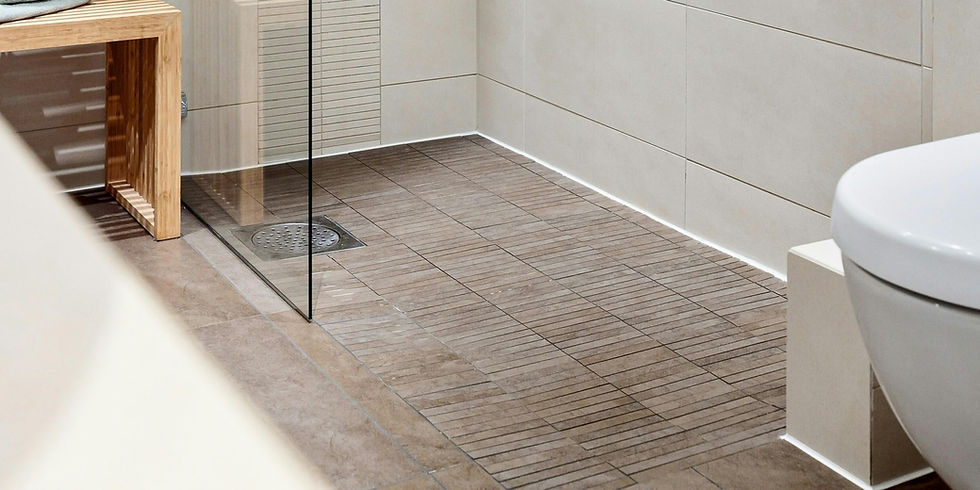
Smaller tiles have more grout lines, which gives your feet more grip and gives the mortar bed more surface area to bond to across that surface. Large format tiles on a sloped shower floor are genuinely harder to install correctly, and they can flex slightly underfoot if the substrate isn't perfectly solid, which leads to cracked grout over time.
If you've got your heart set on a larger tile, it's not impossible, but it takes more prep work to make it right.
Installs That Skip the Waterproofing Layer
Here's one that's costing South Jersey homeowners real money in repairs: skipping or rushing the waterproofing membrane.
Tile and grout are not waterproof. Water gets through grout, It even gets through the tile itself on some finishes. The waterproofing layer, whether it's a sheet membrane, a liquid-applied product, or a foam system like Schluter, is what actually keeps water from reaching your subfloor and the framing behind your walls.
A lot of budget installs skip this or use an inferior product to save a day of labor and a few hundred bucks. It's one of those things you won't notice for a year or two.
Not All Grout Holds Up the Same Way
Grout is not a one-size-fits-all product, and the shower floor is the hardest working surface in the whole bathroom. It's wet constantly, it gets foot traffic, it gets cleaning products on it regularly.
Unsanded grout for thin joints, sanded for wider ones, that part most people know. What fewer people know is that for shower floors specifically, epoxy grout or similar options hold up dramatically better than standard cement grout. They're denser, don't absorb moisture, and resist staining without needing to be sealed on a schedule.
If you want to know know about your tile grout, read our last blog breaking it all down!
You Really Do Need to Wait Before Using the Shower
After the tile is set and grouted, there's a waiting period before that shower should get used. Not a few hours, we're talking 48 to 72 hours minimum for the thinset to fully cure, and that's in normal temperature and humidity conditions.
South Jersey summers are humid and winters are cold. Both of those affect cure times. Rushing it, even by a day, can cause tiles to shift slightly or grout to cure unevenly, and you won't always see the damage immediately but it's there.
If You're Re-Tiling, Pay Attention to What's Underneath
If you're re-tiling an existing shower and there's an old vinyl or mortar shower pan underneath, what's under there matters. We've opened up jobs in older South Jersey homes where the pan was holding moisture for years and the subfloor underneath was soft or had started to mold.
Doing a tile job over a compromised base is short-term thinking. A good contractor will assess what's actually under there before committing to a scope of work, and if they're not doing that, it's worth asking why.
These aren't scare tactics. Most shower floor projects go smoothly when the prep is done right. But the prep is the part that takes experience to do correctly, and it's almost entirely hidden once the tile is down.
Ready to talk about your bathroom? Reach out to us on Instagram or Facebook, or give us a call at 609-233-6617 for a free estimate.


Comments